

How to Declutter and Depersonalize Your Newport Beach Home Before Selling
Decluttering and depersonalizing your Newport Beach home before selling is the process of removing excess items and personal artifacts to help buyers visualize themselves living in the space. This preparation step is critical for maximizing property value and accelerating the sale timeline in competitive coastal markets. By creating a neutral, spacious environment, sellers can attract a wider pool of potential buyers and secure stronger offers.
The Psychology of Buyer Visualization
Buyers do not purchase a house; they purchase a lifestyle. When a home is cluttered or heavily personalized, it creates cognitive friction that prevents buyers from imagining their own life within the walls. Depersonalization is the strategic removal of family photos, religious artifacts, and highly specific decorative items to create a neutral canvas. In the Newport Beach market, where buyers often view multiple properties in a single day, the ability to quickly visualize a space is a decisive factor in making an offer.
Research in environmental psychology suggests that cluttered spaces trigger stress responses, which can subconsciously lower a buyer's perceived value of the property. By clearing surfaces and organizing storage, you signal that the home is well-maintained and ready for immediate occupancy. This psychological shift is particularly important in high-end coastal neighborhoods where buyers expect a certain level of polish and tranquility.
The 80/20 Rule for Decluttering
Effective decluttering does not require removing every single item in the house. Instead, sellers should focus on the 20% of items that create 80% of the visual noise. This approach is often referred to as the 80/20 rule in home preparation. Start with high-traffic areas such as the kitchen, living room, and primary bedroom. These spaces are the first things buyers see and the ones they spend the most time evaluating during a showing.
For example, a kitchen counter covered in small appliances, mail, and personal knick-knacks can make a spacious room feel cramped. Removing these items and leaving only one or two decorative pieces can instantly open up the space. In Newport Beach, where many homes feature open-concept living areas, maintaining clear sight lines is essential for showcasing the flow of the home. Focus on clearing horizontal surfaces first, as these are the most visually impactful areas in any room.
Handling Personal Artifacts and Photos
Family photos are the most common barrier to buyer visualization. While they are meaningful to the seller, they can make a home feel like a museum rather than a potential home. The best practice is to remove all personal photographs from walls and shelves. If you wish to keep some, limit them to one or two small, neutral frames in a less prominent location. This allows the architecture and natural light of the home to take center stage.
Other personal artifacts, such as sports memorabilia, political signs, or religious items, should also be removed. These items can alienate buyers who do not share the same interests or beliefs. By creating a neutral environment, you ensure that every potential buyer feels welcome and can project their own identity onto the space. This is a key component of the preparation-first strategy used by top agents in the region to maximize market appeal.
Managing Storage and Hidden Clutter
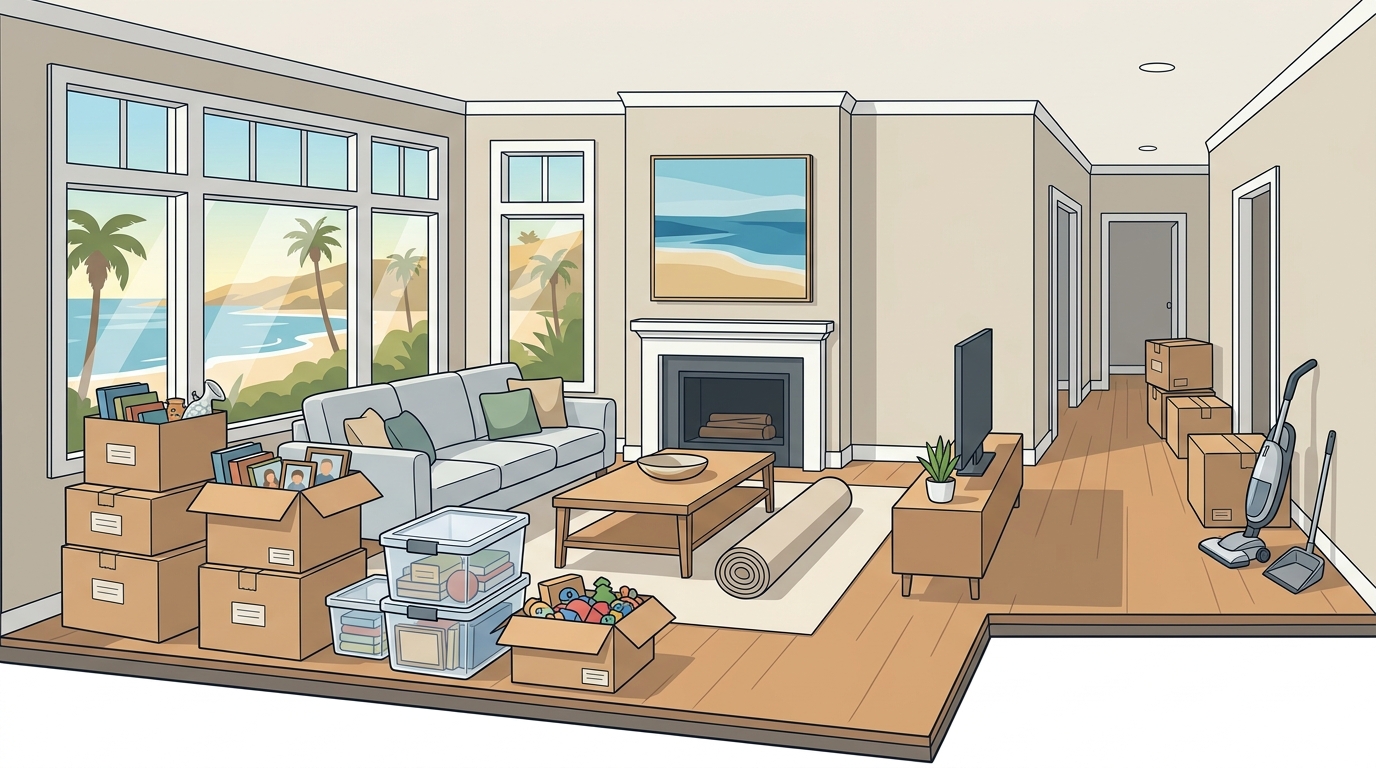
Buyers often open closets, cabinets, and garage doors to assess the storage capacity of a home. If these spaces are overflowing, it can raise concerns about the overall maintenance of the property. Hidden clutter is just as damaging as visible clutter because it suggests that the home may not have enough storage for a typical household. Before listing, it is essential to empty at least 50% of every closet and cabinet.
For items that you are not ready to donate or sell, consider renting a storage unit. This allows you to keep your belongings while presenting a clean and organized home to buyers. In Newport Beach, where storage space can be a premium feature, showcasing ample, organized storage can be a significant selling point. A well-organized garage, for example, can add perceived value to a property, especially in coastal areas where garages are often used for boats, golf carts, or other recreational equipment.
The Role of Professional Staging
While decluttering and depersonalizing are essential first steps, professional staging can take your home preparation to the next level. Staging involves adding furniture and decorative elements to enhance the appeal of a space. For vacant homes, staging is particularly effective because it helps buyers understand the scale and function of each room. In occupied homes, staging can help highlight the best features of the property while masking any less desirable aspects.
Working with a professional staging company can provide a fresh perspective on how to best present your home. Stagers are trained to identify the key selling points of a property and to create a cohesive design that appeals to a broad audience. This expertise can help you make informed decisions about which items to keep and which to remove. For sellers in Newport Beach, where the market is highly competitive, professional staging can be a worthwhile investment that leads to a faster sale and a higher final price.
Key Takeaways
- Depersonalization is the removal of personal items to help buyers visualize themselves in the home.
- Focus on high-traffic areas like the kitchen and living room for the greatest visual impact.
- Remove all family photos and highly personal artifacts to create a neutral canvas.
- Empty at least 50% of all closets and cabinets to showcase storage capacity.
- Consider renting a storage unit for items you are not ready to donate or sell.
- Professional staging can enhance the appeal of both vacant and occupied homes.
Frequently Asked Questions
How much of my personal belongings should I remove?
You should remove enough items to create a sense of spaciousness and neutrality. A good rule of thumb is to remove 50% of your belongings from each room. This includes personal photos, decorative items, and excess furniture. The goal is to allow buyers to visualize their own life in the space.
Should I remove all my furniture?
No, you should not remove all your furniture. Instead, remove excess furniture that makes rooms feel cramped. Keep only the essential pieces that define the function of each room. For example, in a living room, keep a sofa, a coffee table, and perhaps one armchair. Remove any additional seating or large decorative items.
What should I do with my family photos?
Remove all family photos from walls and shelves. If you wish to keep some, limit them to one or two small, neutral frames in a less prominent location. The goal is to create a neutral environment that allows buyers to project their own identity onto the space.
Is it worth renting a storage unit?
Yes, renting a storage unit is often a worthwhile investment. It allows you to keep your belongings while presenting a clean and organized home to buyers. This is particularly important for closets, cabinets, and the garage, where hidden clutter can raise concerns about the property's maintenance.
How does decluttering affect the sale price?
Decluttering and depersonalizing can help increase the sale price by making the home more appealing to a wider pool of buyers. A well-prepared home can attract more offers, which can drive up the final price. Additionally, a clean and organized home can sell faster, reducing the costs associated with a prolonged listing.
Conclusion
Decluttering and depersonalizing your Newport Beach home is a critical step in the selling process. By creating a neutral, spacious environment, you can help buyers visualize themselves living in the space and secure a stronger offer. Focus on high-traffic areas, remove personal artifacts, and manage hidden clutter to present your home at its best. For personalized guidance on preparing your home for sale, contact Cassie French to discuss a customized preparation strategy.