
How to Prepare Your Home for Sale in Newport Beach: The 2026 Ultimate Guide
Preparing your home for sale in Newport Beach requires a strategic blend of accurate pricing, professional staging, and rigorous maintenance. This guide provides a step-by-step framework to maximize your property's value and market appeal. We cover essential topics from coastal aesthetic styling to California-specific legal disclosures. Read on to master the preparation process and position your home for a successful sale.
Pricing Strategy
Pricing strategy is the most critical factor in a successful real estate transaction. An accurate initial price attracts the right buyers and prevents a property from becoming stale on the market. In the competitive Newport Beach market, overpricing can lead to prolonged listing times and eventual price reductions that signal distress to buyers. Underpricing, however, leaves money on the table. A Comparative Market Analysis (CMA) is a detailed report that compares your home to similar properties that have recently sold, are currently listed, or failed to sell. This data-driven approach ensures your listing price reflects current market realities rather than personal sentiment.
Understanding Market Dynamics
Market dynamics in coastal Orange County fluctuate based on interest rates, inventory levels, and seasonal demand. A strategic pricing model accounts for these variables. It is essential to work with an agent who understands the specific micro-markets of Newport Beach, such as the differences between the Peninsula, Newport Heights, and the Spyglass area. Each neighborhood has distinct buyer demographics and price points. Aligning your price with the specific neighborhood's recent sales data is the foundation of a strong launch.
Home Staging
The Role of Design Expertise
Effective staging requires an understanding of interior design principles, spatial flow, and color psychology. It is not simply about placing furniture in a room. It involves curating a cohesive look that complements the architectural style of the home. For example, a mid-century modern home in North Tustin requires a different staging approach than a traditional estate in Newport Heights. Professional stagers bring in furniture, art, and accessories that create a polished, magazine-ready aesthetic. This level of detail is crucial for attracting serious buyers in the luxury segment.

Staging and Presentation
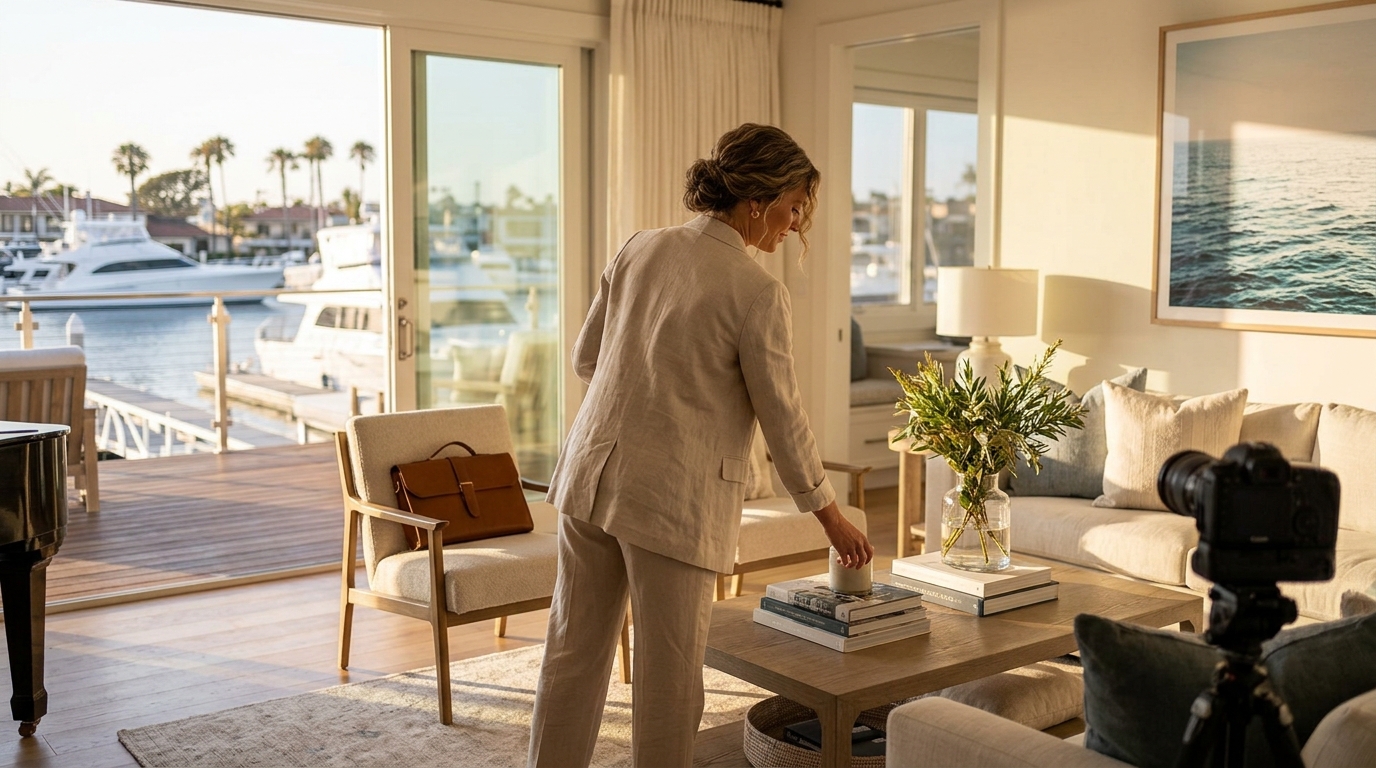
Staging and presentation are closely linked, as the final look of the home depends on how elements are arranged and displayed. Presentation includes the condition of the furniture, the cleanliness of the space, and the overall ambiance. Every item in the home should be intentional. Cluttered surfaces, mismatched decor, or worn-out furniture can detract from the value of the property. A professional presentation ensures that the home feels fresh, clean, and well-maintained. This attention to detail signals to buyers that the home has been cared for, which can influence their willingness to pay a premium.
Creating Emotional Connection
The goal of staging is to create an emotional connection with the buyer. When a buyer walks into a beautifully staged home, they feel a sense of calm and aspiration. This emotional response is powerful and can lead to competitive offers. Staging helps buyers see the potential of the space, even if the layout is unconventional. By presenting the home in its best light, you increase the likelihood of multiple offers and a bidding war. This is particularly important in a market where inventory is low and buyers have high expectations.
Decluttering and Depersonalization
Decluttering is the process of removing excess items from a home to create open, spacious living areas. Depersonalization is the removal of personal items, such as family photos, religious artifacts, and unique collections, to make the home feel neutral. These two steps are the foundation of any staging project. A cluttered home feels smaller and more chaotic, which can turn buyers away. By removing personal items, you allow buyers to imagine their own life in the space. This neutrality is essential for attracting a wide range of potential buyers. It is a difficult but necessary step for sellers who have lived in their homes for many years.
Strategic Removal
Strategic removal involves deciding what to keep, donate, sell, or store. It is important to be ruthless in this process. Every item left in the home should serve a purpose in the staging plan. Personal items can distract buyers and make it difficult for them to connect with the space. By depersonalizing the home, you create a blank canvas that buyers can project their own identity onto. This approach is particularly effective in luxury markets, where buyers expect a high level of polish and sophistication. It is a simple but powerful way to increase the perceived value of the property.
Curb Appeal
Curb appeal is the perceived value of a property based on its exterior appearance. It is the first impression buyers have of the home, and it can make or break a sale. In Newport Beach, where homes are often viewed from the street or from a car, curb appeal is especially important. A well-maintained exterior signals that the interior is also in good condition. This includes landscaping, paint, roofing, and entryway details. Investing in curb appeal is one of the most cost-effective ways to increase the value of your home. It can also help the home stand out in online listings, where the exterior photo is often the first thing buyers see.
Exterior Enhancements
Exterior enhancements can include simple tasks like power washing the driveway, repainting the front door, or updating the landscaping. More significant improvements, such as new siding or a roof replacement, can also be considered if the home is older. The goal is to create a cohesive, attractive exterior that complements the architectural style of the home. In coastal areas, it is also important to address any signs of salt air damage, such as peeling paint or rusted fixtures. These details can be costly to fix later, so addressing them before listing is a smart move. A strong curb appeal sets the tone for the entire showing.
Coastal Aesthetic Styling
Coastal aesthetic styling is a design approach that incorporates natural elements, light colors, and relaxed textures to evoke the feeling of the beach. This style is particularly popular in Newport Beach, where the ocean is a central part of the lifestyle. It involves using a palette of whites, blues, and sandy neutrals, along with natural materials like wood, rattan, and linen. The goal is to create a light, airy, and inviting atmosphere that reflects the coastal environment. This style is timeless and appeals to a wide range of buyers. It is a key element of staging in coastal Orange County.
Integrating Natural Light
Integrating natural light is a crucial aspect of coastal aesthetic styling. Large windows, light-colored curtains, and reflective surfaces can help maximize the amount of natural light in a room. This creates a bright, open feel that is characteristic of coastal homes. It is also important to use mirrors strategically to reflect light and create the illusion of more space. By embracing the natural light and views of the home, you can create a staging plan that highlights the best features of the property. This approach is particularly effective in homes with ocean or bay views, where the natural light and scenery are the main attractions.
Professional Photography
Professional photography is the process of capturing high-quality images of a property for marketing purposes. In the digital age, online listings are the primary way buyers discover homes. Therefore, the quality of the photos is critical. Professional real estate photographers use wide-angle lenses, high-resolution cameras, and advanced editing software to create stunning images that showcase the home in its best light. They also understand how to stage the photos, ensuring that every room looks its best. High-quality photos can significantly increase the number of views and inquiries for a listing. They are an essential part of any successful marketing strategy.
Virtual Tours and Video
Virtual tours and video are increasingly important tools in real estate marketing. They allow buyers to explore the home from the comfort of their own home, which is especially useful for out-of-town buyers. A professional video tour can provide a more immersive experience than static photos. It can highlight the flow of the home, the quality of the finishes, and the surrounding neighborhood. These tools can help buyers make more informed decisions and reduce the number of unnecessary showings. They are a valuable addition to any marketing plan, particularly for luxury properties.
Pre-Listing Inspection
A pre-listing inspection is a professional evaluation of a property's condition before it is put on the market. It is conducted by a licensed home inspector who checks for potential issues with the structure, systems, and components of the home. This inspection helps sellers identify and address any problems before buyers discover them. It can also provide a sense of security for buyers, as it shows that the seller has been transparent about the home's condition. In a competitive market, a pre-listing inspection can be a selling point that sets your property apart from others. It is a proactive step that can save time and money in the long run.
Addressing Issues Early
Addressing issues early is the main benefit of a pre-listing inspection. If the inspector finds a major problem, such as a faulty roof or electrical issue, you can get quotes for repairs and decide whether to fix it or adjust the price. This allows you to negotiate from a position of strength. It also prevents surprises during the buyer's inspection, which can lead to renegotiation or even a cancelled deal. By being upfront about the home's condition, you build trust with buyers and demonstrate your commitment to a smooth transaction. This is a smart strategy for any seller, regardless of the home's condition.
California Disclosures
California disclosures are legal documents that sellers must provide to buyers about the condition of the property. These disclosures are required by state law and cover a wide range of topics, including structural issues, environmental hazards, and property boundaries. Failure to provide accurate disclosures can result in legal liability for the seller. It is important to work with a real estate agent who is familiar with California's disclosure requirements. They can help you complete the forms accurately and ensure that you are in compliance with the law. This is a critical step in the selling process that should not be overlooked.
Understanding Legal Obligations
Understanding your legal obligations is essential when preparing to sell a home in California. The Transfer Disclosure Statement (TDS) is the primary document that sellers must complete. It asks for detailed information about the property's condition and any known defects. It is important to answer these questions honestly and thoroughly. If you are unsure about how to answer a question, it is best to consult with a real estate attorney. Accurate disclosures protect you from future legal issues and build trust with buyers. They are a fundamental part of the selling process in California.
Deferred Maintenance
Deferred maintenance is the accumulation of repairs and updates that have been postponed over time. It is a common issue in older homes and can significantly impact the value of a property. Buyers are often wary of homes with visible signs of deferred maintenance, as it suggests that the seller has not taken care of the property. Addressing deferred maintenance before listing is a smart investment. It can include simple tasks like fixing leaky faucets, repainting walls, or replacing worn-out carpets. These improvements can make a big difference in the overall impression of the home. They show that the property has been well-maintained and is ready for a new owner.
Prioritizing Repairs
Prioritizing repairs is key to managing your budget effectively. Not all repairs are created equal. Some, like a new roof or HVAC system, are major investments that can significantly increase the home's value. Others, like fixing a cracked tile, are minor but can still impact the buyer's perception. It is important to work with a contractor who can help you prioritize the most impactful repairs. They can also provide accurate quotes so you can make informed decisions. By focusing on the most important repairs, you can maximize your return on investment and present the home in its best condition.
Permit History
Permit history is a record of all the permits that have been issued for work done on a property. It is an important document that buyers and their inspectors will review. It provides evidence that any renovations or additions were done in compliance with local building codes. A lack of permits for significant work can be a red flag for buyers and may lead to issues during the sale. It is important to gather all relevant permit documents before listing. If you are unsure about the permit status of any work, it is best to contact the local building department. This transparency can help avoid complications and build trust with buyers.
Verifying Compliance
Verifying compliance is a crucial step in the selling process. If you find that any work was done without a permit, you may need to obtain a retroactive permit or have the work inspected. This can be a time-consuming and costly process, so it is best to start early. It is also important to keep all documentation related to the work, including contracts, invoices, and photos. These documents can be helpful in proving that the work was done correctly. By being proactive about permit history, you can ensure a smooth and transparent transaction.
Staging and Photography
Staging and photography are two sides of the same coin. The way a home is staged directly impacts how it looks in photos. Professional photographers work closely with stagers to ensure that the home is presented in the best possible light. This collaboration is essential for creating a cohesive and compelling marketing package. The stager prepares the home, and the photographer captures the results. Together, they create a visual narrative that tells the story of the property. This synergy is a key factor in a successful sale. It ensures that the home looks as good in person as it does online.
Optimizing for Digital Platforms
Optimizing for digital platforms is a critical aspect of modern real estate marketing. Photos must be high-resolution, well-lit, and properly formatted for various websites and apps. They should also be optimized for mobile viewing, as many buyers browse listings on their phones. This means paying attention to composition, framing, and file size. A professional photographer understands these technical requirements and can ensure that the photos look great on any device. This attention to detail is essential for reaching a wide audience and maximizing the impact of your marketing efforts.
Waterfront Features
Waterfront features are the unique attributes of a property that is located on or near a body of water. In Newport Beach, this includes oceanfront, bayfront, and canal properties. These features are highly desirable and can significantly increase the value of a home. They include docks, boat slips, private beaches, and unobstructed views. Highlighting these features in your marketing is essential. It is also important to address any maintenance issues related to the waterfront, such as dock repairs or seawall concerns. Buyers are well-aware of the unique challenges of waterfront living, so transparency is key. By showcasing the benefits and addressing the challenges, you can attract the right buyers for your property.
Marketing the Lifestyle
Marketing the lifestyle is a powerful strategy for waterfront properties. It is not just about the house; it is about the lifestyle it offers. This includes access to boating, fishing, and water sports, as well as the beauty of the natural surroundings. High-quality photos and videos that capture the waterfront lifestyle can be very effective in attracting buyers. They can evoke an emotional response and help buyers imagine themselves living in the home. This approach is particularly effective for luxury properties, where the lifestyle is a major selling point. By focusing on the lifestyle, you can differentiate your property from others on the market.
Key Takeaways
- Pricing strategy is the foundation of a successful sale; use a CMA to set an accurate initial price.
- Home staging transforms a lived-in space into a neutral, inviting environment that appeals to buyers.
- Decluttering and depersonalization are essential steps that allow buyers to visualize their own life in the home.
- Curb appeal is the first impression and can significantly impact the perceived value of the property.
- Coastal aesthetic styling is a popular design approach that evokes the feeling of the beach and is well-suited for Newport Beach.
- Professional photography and virtual tours are critical tools for marketing in the digital age.
- A pre-listing inspection helps identify and address potential issues before buyers discover them.
- California disclosures are legal requirements that protect sellers from future liability.
Frequently Asked Questions
How much does home staging cost in Newport Beach?
The cost of home staging varies depending on the size of the home and the level of staging required. It is best to get quotes from multiple professional stagers to compare prices and services.
Is a pre-listing inspection necessary?
While not legally required, a pre-listing inspection is highly recommended. It helps identify potential issues and can save time and money in the long run.
How long does the staging process take?
The staging process typically takes a few days to a week, depending on the size of the home and the amount of decluttering required.
What is the best time of year to sell a home in Newport Beach?
Spring and early summer are generally the best times to sell a home in Newport Beach, as the weather is pleasant and buyers are more active.
Do I need to live in the home while it is staged?
You can live in the home while it is staged, but it is important to follow the stager's guidelines to maintain the look and feel of the property.
How do I handle California disclosures?
Work with a real estate agent who is familiar with California's disclosure requirements. They can help you complete the forms accurately and ensure compliance with the law.